


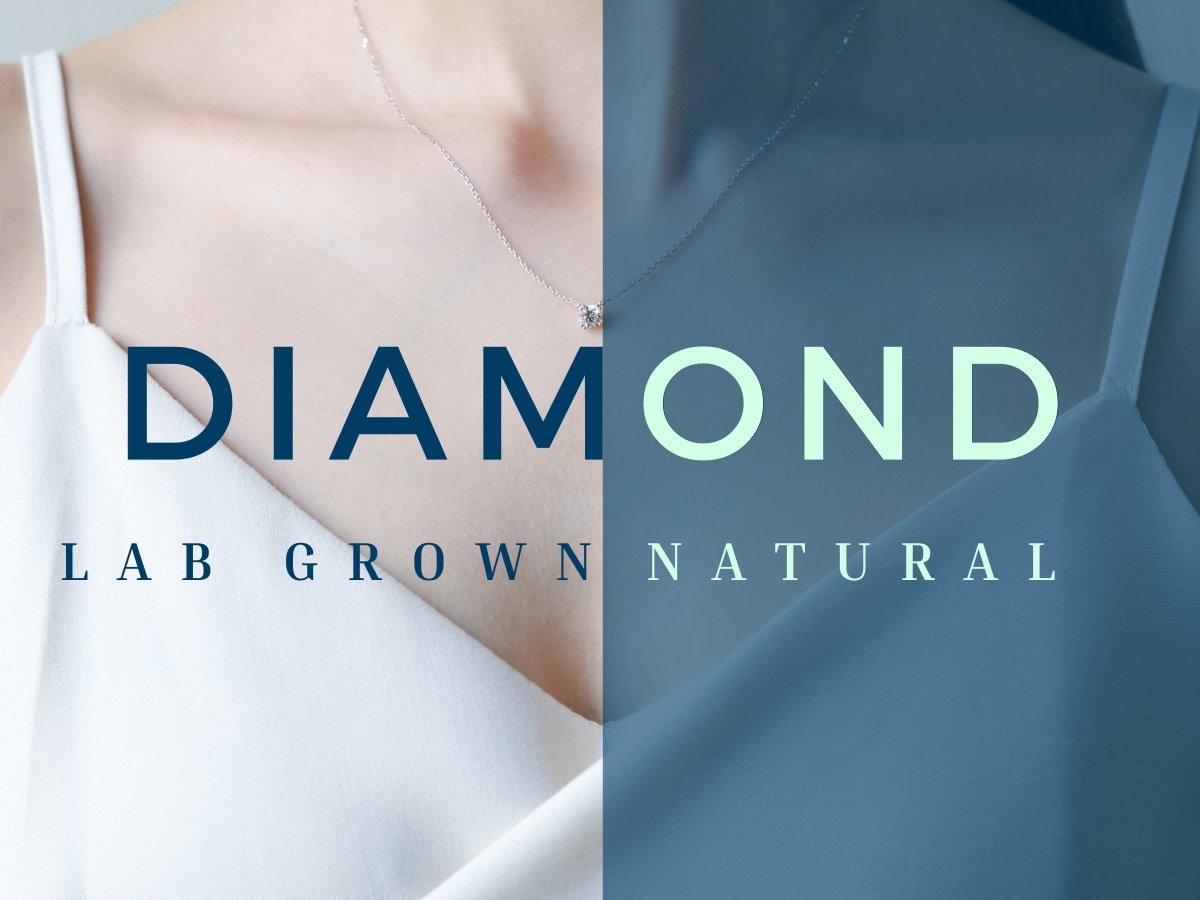
Lab-Grown Diamonds vs. Natural Diamonds
Lab-grown diamonds have gained popularity in recent years, becoming a new option when purchasing a diamond engagement ring. However, many people may be skeptical of this idea. Artificially manufactured diamonds made in a laboratory may not align with your preconceptions. But after reading this article, your perception of lab-grown diamonds might change.
Here's what to consider when deciding whether to choose a lab-grown diamond or a natural stone.
■What are lab-grown diamonds?
Lab-grown diamonds are artificial diamonds, also known as synthetic diamonds = "Laboratory-Created." In this article, we will consistently refer to them as "lab-grown diamonds."
Lab-grown diamonds are manufactured in a controlled laboratory environment using methods such as Chemical Vapor Deposition (CVD) or High-Pressure/High-Temperature (HPHT). Lab-grown diamonds possess the same chemical and physical properties as natural diamonds mined from the Earth and are certified by organizations such as the Gemological Institute of America (GIA) and the International Gemological Institute (IGI).
■Are lab-grown diamonds real?
Lab-grown diamonds are considered real diamonds, just like natural diamonds mined from the Earth. Like natural diamonds, they are graded by shape, size, color, and clarity.
■Lab-Grown Diamonds vs. Natural Diamonds - What do the experts say?
Natural and lab-grown diamonds have identical optical and physical properties. In 2018, the U.S. Federal Trade Commission (FTC) recognized lab-grown diamonds as real. In fact, the Gemological Institute of America (GIA) has been grading lab-grown diamonds since 2007. As of July 1, 2019, the GIA no longer uses the word "synthetic" on its lab-grown diamond reports and certificates. GIA Lab-Grown Diamond Reports include the GIA's standard color, clarity, and cut grading scales for reference."
■Lab diamonds vs. "real" diamonds - What's the difference?
The difference between natural and lab-grown diamonds cannot be distinguished with the naked eye. Natural diamonds contain trace amounts of nitrogen, while lab-grown diamonds do not. This is actually one of the symbols gemologists use to distinguish whether a diamond is lab-grown or natural.
Natural diamonds are formed under the pressure of the Earth's crust over millions of years, then mined, cut, and polished. Lab-grown diamonds undergo the same process but are created in a laboratory setting. In fact, the lab-grown diamond manufacturing process significantly shortens the growth time from millions of years to just a few months. Afterward, lab-grown diamonds are cut and polished.
■How are lab-grown diamonds made?
Lab-grown diamonds are sometimes referred to as artificial or synthetic. Such alternative terms can confuse consumers. However, all these terms refer to the same thing: certified diamonds 'manufactured' in a lab. Lab-grown diamonds are sometimes referred to as CVD or HPHT, which simply indicates the process used to create the diamond.
■Lab-Made Diamonds - Two Common Methods
There are two processes for making lab-grown diamonds.
1. Chemical Vapor Deposition (CVD)
The first method is called Chemical Vapor Deposition (CVD). This technique involves flowing gases such as hydrogen and methane over a silicon substrate placed in a vacuum, synthesizing diamond crystals under high temperature and high pressure.
2. High-Pressure High-Temperature (HPHT)
High-Pressure High-Temperature (HPHT) is another method for producing lab-grown diamonds, replicating the formation process of natural diamonds.
In this method, diamond raw materials are heated and crystallized under high-pressure, high-temperature conditions. The high-temperature and high-pressure environment promotes diamond crystal growth, allowing for the production of large diamonds in a relatively short period. This method is suitable for mass production and can be manufactured at a relatively low cost. Additionally, colored diamonds can be produced by adding impurities to the raw materials.
■Summary
How was it?
In recent years, with the current state of diamond mining being socially and environmentally poor, voices advocating for ethical and sustainable lab-grown diamonds have been rising among celebrities and intellectuals worldwide.
Despite being artificial diamonds, they possess the same optical and physical properties and are real diamonds that cannot be distinguished by appearance.
While various opinions and concepts exist, I hope you can keep lab-grown diamonds in mind as a new option.
Thank you for reading to the end.
Related article
「Differences between Natural Diamonds, Lab-Grown Diamonds, and Simulant Stones」
Read more

Differences between natural diamonds, lab-grown diamonds, and diamond simulants
We explain the differences between natural diamonds, lab-grown diamonds, and diamond simulants, and how to tell them apart.
Read more
Gold Purity Levels Every Jewelry Lover Should Know
When choosing jewelry, "metal purity" is one of the most important factors.You've probably seen markings like "K18," right?We'll explain the differences in gold purity, their respective benefits, a...
Read more