

%20for%20the%20skin%20you%20see%20on%20food%20items,%20and%20%22%E9%9D%A9%22%20(kawa)%20for%20materials%20used%20in%20daily%20items%20like%20bags%20and%20wallets.%20Do%20you%20know%20why%20the%20spelling%20is%20different?...)
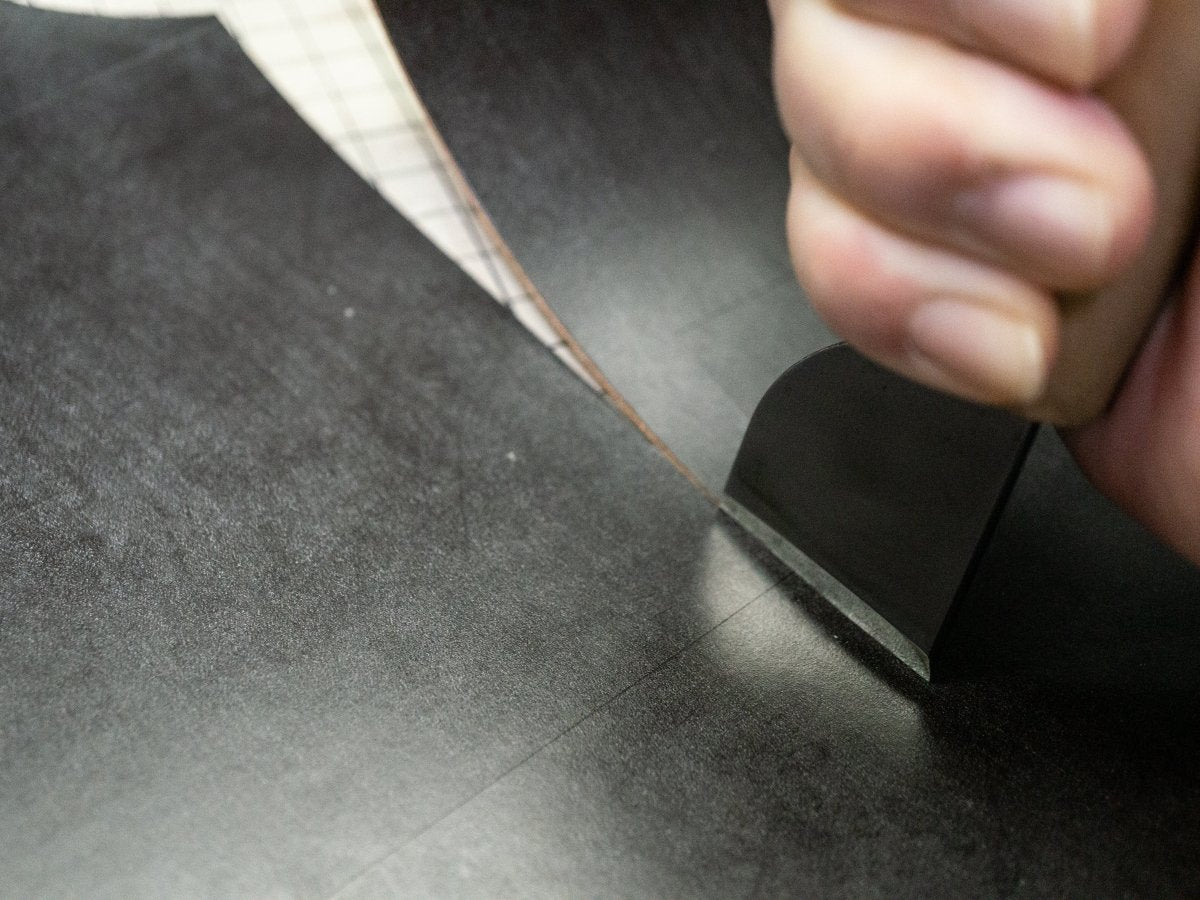
The surprisingly little-known difference between "kawa" (animal skin) and "kawa" (leather), and the process of "tanning."
You've probably noticed that we use "皮" (kawa) for the skin you see on food items, and "革" (kawa) for materials used in daily items like bags and wallets. Do you know why the spelling is different?
Actually, even for the same material, the name changes depending on whether or not a certain process has been applied.
This time, we will explain the difference between "皮" and "革."

◯ The Process of "Tanning" Rawhide
Have you ever heard the term "tanning" (鞣し) for rawhide? This very process of tanning is what transforms rawhide into leather.
Now, let's delve deeper into this "tanning" process.
◯ The Role of Tanning
Animal hides, like meat, are organic matter and will rot over time.
The process of preventing this decay is called "tanning" (鞣し).
Furthermore, as the character "鞣す" (namasu) suggests, an important role of tanning is to make leather "flexible" (柔). Through the tanning process, "rawhide" is reborn into "leather" that is smooth, soft, and durable.
◯ How Tanning Works
"Tanning" (鞣し) is a processing technique that involves removing proteins and fats that cause decay from animal hides, and then using chemicals to impart flexibility and durability. Normally, raw hide hardens as it loses moisture over time, but by bonding tanning agents such as tannin and chrome with protein and collagen molecules, and stabilizing the fiber structure, the hide can be processed into leather products.
Once leather has been tanned, it has the characteristic that its properties do not easily revert to their original state.
◯ From Rawhide to Leather - The Tanning Process
While we use the single word "tanning," the process of turning rawhide into leather that can be distributed as a material involves a wide range of tasks. Therefore, it is rare for all the subsequent steps to be carried out in a single factory; division of labor is common. Among these,businesses that perform the leather tanning process are called "tanners."
Tanning Process
This explanation will focus on chrome tanning as an example.
<Preparation>
Upon arrival at the factory, the raw hides undergo several preparatory steps before tanning begins.
① Rawhide
Raw hides, stripped from food animals and treated with preservatives, are transported.
② Soaking and Rehydration
The raw hides are rotated in large drums with copious amounts of water to rehydrate them from their dehydrated state, restoring them to flexible raw hides. Additionally, impurities attached to the raw hides are washed away along with salt.
*This treatment affects the ease of subsequent chemical processing.
③ Fleshing
Bits of flesh and fat adhering to the surface of the hide are removed using a fleshing machine.
④ Liming and Hair Removal
The raw hides are soaked in a strong alkaline solution to loosen the collagen fibers and remove unwanted hair, fat, and decompose the raw hide itself.
The hide swells and softens, and hair and epidermis dissolve and fall off naturally.
⑤ Splitting
The hide is split with a splitting machine to adjust its thickness. (In some cases, there is no splitting, or it is done after tanning.)
⑥ Scuddimg
Hair roots, fat, and other impurities that were not completely removed during the liming process are carefully removed using a scudding machine, a scudding knife (銓刃), or a beaming knife (銓刀).
⑦ Deliming and Bating
The hide is prepared for tanning. Calcium ions are removed from the hide, which became alkaline due to liming (deliming), allowing tanning agents to penetrate and deposit smoothly. Afterward, enzymes are used to break down and remove unnecessary proteins to give the grain a smooth and flexible feel (bating).
⑧ Pickling
The weakly alkaline hide is adjusted to an acidic state. Since tanning agents dissolve in acid, this process makes it easier for the hide to absorb the tanning agents.
<Tanning>
⑨ Tanning
Hides and chemicals are placed in large drums (タイコ) and rotated to allow penetration. This is the main tanning process. Hides softened through this process are called leather.
⑩ Wringing
The leather is passed through a machine with large rollers to squeeze out excess water.
11 Shaving
The overall thickness of the inside of the hide is adjusted. At this stage, it is matched to the desired thickness for the product.
12 Neutralization
The acidic leather, due to pickling, is neutralized with an alkaline solution to ensure that dyes and fatliquors penetrate evenly.
13 Retanning
The leather is tanned again using a different formulation of tanning agents than in step 9, further bringing it closer to the desired properties.
14 Dyeing and Fatliquoring
Dyes and leather are placed in a drum and rotated for dyeing. In addition to drum dyeing, paddle dyeing and spray dyeing are also performed.
Fatliquoring is also performed, where fatliquoring agents are absorbed into the leather to add properties such as flexibility, feel, luster, and water resistance.
15 Wringing and Stretching
Excess water is again squeezed from the hide, and the hide, which has shrunk during the previous steps, is stretched firmly to return it to its original size.
16 Drying
The leather is dried to fix the dyes and fatliquors.
There are various drying methods such as natural drying, hot air drying, and sun drying, and this is an important process that affects the texture of the leather.
<Finishing>
17 Tempering
A process to add appropriate moisture to the leather and make it easier to rub and loosen.
18 Staking
The fibers that have hardened during drying are massaged to restore flexibility and elasticity.
19 Toggle Drying
The leather is stretched tightly, and its edges are fixed to a frame, held taut.
20 Edge Trimming
The process of removing the edges that have deformed and hardened due to drying.
21 Corrected Grain
A leather finishing method that uses pigments in the coating as a coloring agent.
22 Painting and Surface Finishing
The surface of the hide is painted, and various finishes are applied to achieve the desired texture.
Surface finishing is expected to improve the texture, durability, and water repellency, and there are various methods. I will write about finishing methods in a separate article.
◯ Types and Characteristics of Tanning
This section provides a simple explanation of the general types of tanning and their characteristics.
① Vegetable Tanning
・Has firmness and body
・Is plastic (moldable)
・Easily absorbs moisture
・Undergoes aging (patina)
・Tanning is labor-intensive
② Chrome Tanning
・Is supple, light, and elastic
・Has elasticity and heat resistance
・High productivity and inexpensive
・Good color development
・Contains metallic substances
③ Combination Tanning
・Possesses the durability and suppleness of chrome tanning
・Can achieve plasticity and a natural material feel
◯ Summary
This time, we explained tanning, the process that transforms rawhide into leather.
Having read this far, I believe you have a general understanding of tanning.
We plan to explain more detailed content in other articles, so please be sure to check them out!
Read more
A must-read for silk beginners: What exactly is silk?
Silk is said to be *1the fiber closest to human skin, and it is a fiber that causes very little irritation to the skin and hair. For this reason, it is commonly used for goods, underwear, and beddi...
Read more
How to distinguish high-quality cashmere: the quality varies greatly even within the same material.
Cashmere, known as the "jewel of fibers," is indispensable during the cold winter months. Cashmere knitwear ranges from items under 10,000 yen at Uniqlo and Muji to those that sell for over 100,000...
Read more