
Article: A must-read for silk beginners: What exactly is silk?
A must-read for silk beginners: What exactly is silk?
In daily life, we hear various metaphorical expressions like "silky ○○" or "silk bath," don't we! Can you correctly explain what silk fiber is?
This time, we will introduce silk, a luxury material that many of you vaguely know about.

What exactly is silk?
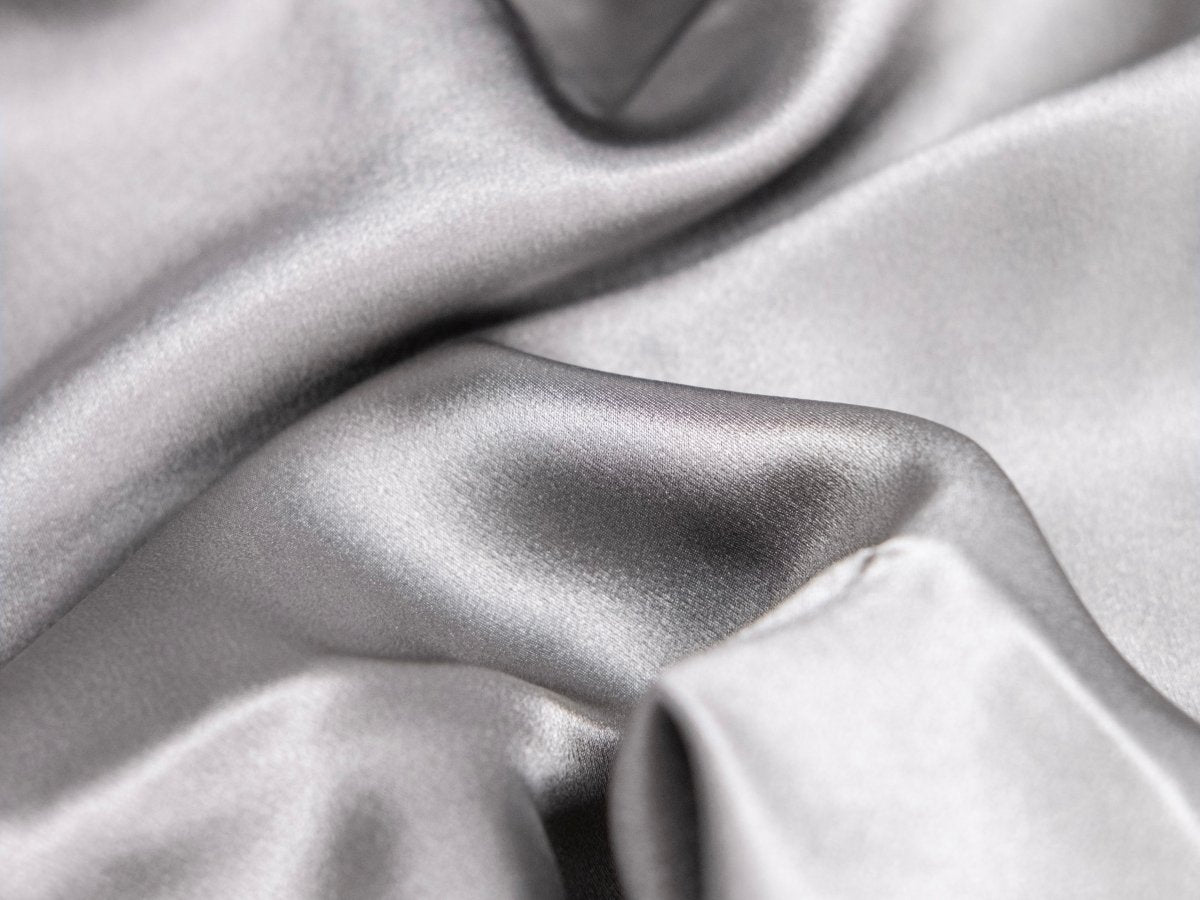
In short, silk is a natural fiber made from the cocoons of silkworms!
Silk is said to be *1 the fiber most similar to human skin, and it is a fiber that causes very little irritation to the skin and hair. For this reason, it is commonly used for goods to protect delicate hair, underwear, and bedding. It can be used safely even in homes with babies, so it can be said to be an excellent item for the whole family. *1: Its main component is "protein," which is the same as human skin.
Comparison by material
Next, we will explain how silk differs from other fibers. (This time, we will only explain silk.)
Silk is a natural fiber made from silkworms and is classified as an animal-based material. Examples of animal-based materials you might know are wool and cashmere.

Here we will explain silk based on six evaluation criteria.
① Texture
As a material similar to human skin, it clings to the skin.
② Smoothness
It is an incredibly "draping" material with such delicate raw silk that the seams are almost imperceptible.
③ Moisture absorption
Its moisture absorption and release is said to be about 1.5 times that of cotton, keeping you dry even in humid seasons.
④ Moisture release
Due to its low thermal conductivity, it is cool in summer and warm in winter.
⑤ Durability
Its fine fibers make it vulnerable to friction.
⑥ Ease of washing
Since the fabric is easily damaged when wet, hand washing is best instead of machine washing.
You can find more details on how to care for it at home here.
Summary
How was that? Although we've only covered the basics of silk, it's enough to remember that "it's a natural fiber made from silkworm cocoons, and it's gentle enough for babies to use!"
We will introduce the effects of silk and its pros and cons in separate articles.